Skip to content

CHOOSE YOUR PATH

Compare the tribes

Seven paths. Different strengths. Make your choice with the numbers in front of you.

Choose 2 or 3 tribes

GaulsThree tribes selected. Remove one to add another.RomansTeutonsEgyptiansHunsThree tribes selected. Remove one to add another.SpartansThree tribes selected. Remove one to add another.VikingsThree tribes selected. Remove one to add another.

Add a third tribe to change a pair, then remove one. Selected chips show a check mark. Links preserve your selection.

Share this comparison — Copy the page URL to share this selection.

Overview

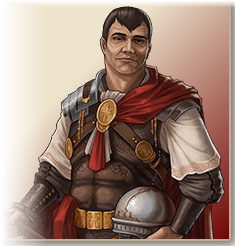
Romans portrait

Romans

Balanced

For beginners: Intermediate

Strengths

  • Parallel resource-field and village-building construction helps develop infrastructure.
  • Specialist infantry and several cavalry options allow a varied army.
  • The City Wall and Horse Drinking Trough offer distinct development paths.

Weaknesses

  • Parallel queues require enough resources to keep both productive.
  • Heavy cavalry costs substantial resources and crop.
  • A varied roster can tempt you to fund too many plans at once.
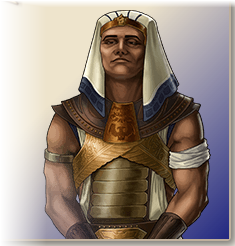
Egyptians portrait

Egyptians

Economy

For beginners: Approachable

Strengths

  • Armed Slaves have a low resource cost and short base training time.
  • Temple Guardians provide strong infantry defense per unit.
  • Waterworks can improve annexed oasis bonuses after its prerequisites are met.

Weaknesses

  • Low-cost troops still consume crop.
  • The starting unit has little attack power.
  • Waterworks is a developed-village investment, not a free starting bonus.
Teutons portrait

Teutons

Offense

For beginners: Demanding

Strengths

  • Clubswingers offer inexpensive attack power and short base training.
  • Spearmen provide an infantry answer to cavalry threats.
  • Large merchant loads support bulk transfers.

Weaknesses

  • Clubswingers have particularly weak defense against cavalry.
  • Merchant journeys are slower than those of the other six tribes.
  • An offensive opening needs attention, information and replacement resources.

Military

Highlights show the best of the selected tribes. Lower is better for cost per attack point; higher is better for the other summary rows. Equal values share the highlight.

Bars use the maximum across all seven tribes, even when only two are selected. Cost efficiency uses the inverse ratio (best cost ÷ cost).

MilitaryRomansEgyptiansTeutons
Highest attack per combat unitEquites Caesaris
180Best
Royal Chariot
110
Teutonic Knight
150
Highest average defense per combat unitEquites Caesaris
92.5
Royal Chariot
135Best
Paladin
70
Fastest combat unitEquites Imperatoris
14
Chariot
15Best
Paladin
10
Largest combat-unit carryEquites Imperatoris
100
Royal Chariot
70
Paladin
110Best
Lowest resource cost per attack pointImperian
8.57
Egyptian Fighter
14
Clubswinger
6.25Best
How to read the data

Summary records exclude scouts, siege and expansion units. Average defense is (infantry defense + cavalry defense) ÷ 2. Role representatives below are derived from the roster: highest anti-cavalry defense among infantry, highest attack among cavalry, and highest average defense among cavalry. One unit can appear in more than one role; this does not imply a special bonus.

Strengths at a glance

Radar comparing five dimensions, including an editorial beginner ratingAttack = highest combat-unit attack; defense = highest combat-unit average defense; speed = fastest combat unit; logistics = merchant capacity × merchant speed. These four axes are percentages of the seven-tribe maximum. *Beginner friendliness is an editorial 1–5 rating, scaled to 100; it is not an engine stat. The table provides the same values in text.AttackDefenseSpeedLogisticsBeginner friendliness*
RomansEgyptiansTeutons

Attack = highest combat-unit attack; defense = highest combat-unit average defense; speed = fastest combat unit; logistics = merchant capacity × merchant speed. These four axes are percentages of the seven-tribe maximum. *Beginner friendliness is an editorial 1–5 rating, scaled to 100; it is not an engine stat. The table provides the same values in text.

AxisRomansEgyptiansTeutons
Attack
78.3Best
47.8
65.2
Defense
68.5
100Best
51.9
Speed
73.7
78.9Best
52.6
Logistics
44.4
66.7Best
66.7Best
Beginner friendliness*
60
80Best
40

Role-by-role comparison

Summary records exclude scouts, siege and expansion units. Average defense is (infantry defense + cavalry defense) ÷ 2. Role representatives below are derived from the roster: highest anti-cavalry defense among infantry, highest attack among cavalry, and highest average defense among cavalry. One unit can appear in more than one role; this does not imply a special bonus.

In the role tables, lower resource cost, upkeep and training time are highlighted; higher attack, defenses, speed and carry are highlighted.

Starting infantry
RomansLegionnaire
EgyptiansArmed Slave
TeutonsClubswinger
Starting infantryRomansEgyptiansTeutons
Attack
40Best
10
40Best
Defense vs infantry
35Best
30
20
Defense vs cavalry
50Best
20
5
Speed (tiles/h)
6
7Best
7Best
Carry
50
20
60Best
Total resource cost
400
165Best
250
Upkeep (crop/h)
1Best
1Best
1Best
Base training (seconds)
1,600
640Best
720
Best anti-cavalry infantry available
RomansLegionnaire
EgyptiansTemple Guardian
TeutonsSpearman
Best anti-cavalry infantry availableRomansEgyptiansTeutons
Attack
40Best
25
10
Defense vs infantry
35
110Best
35
Defense vs cavalry
50
80Best
60
Speed (tiles/h)
6
6
7Best
Carry
50Best
35
40
Total resource cost
400
650
340Best
Upkeep (crop/h)
1Best
1Best
1Best
Base training (seconds)
1,600
1,760
1,120Best
Espionage
RomansEquites Legati
EgyptiansHorse Scout
TeutonsScout
EspionageRomansEgyptiansTeutons
Attack
0Best
0Best
0Best
Defense vs infantry
20Best
20Best
10
Defense vs cavalry
10Best
10Best
5
Speed (tiles/h)
16Best
16Best
9
Carry
0Best
0Best
0Best
Total resource cost
360Best
380
360Best
Upkeep (crop/h)
2
2
1Best
Base training (seconds)
1,360
1,360
1,120Best
Offensive cavalry
RomansEquites Caesaris
EgyptiansRoyal Chariot
TeutonsTeutonic Knight
Offensive cavalryRomansEgyptiansTeutons
Attack
180Best
110
150
Defense vs infantry
80
120Best
50
Defense vs cavalry
105
150Best
75
Speed (tiles/h)
10Best
10Best
9
Carry
70
70
80Best
Total resource cost
2,170
1,800
1,525Best
Upkeep (crop/h)
4
3Best
3Best
Base training (seconds)
3,520
3,120
2,960Best
Defensive cavalry
RomansEquites Caesaris
EgyptiansRoyal Chariot
TeutonsPaladin
Defensive cavalryRomansEgyptiansTeutons
Attack
180Best
110
55
Defense vs infantry
80
120Best
100
Defense vs cavalry
105
150Best
40
Speed (tiles/h)
10Best
10Best
10Best
Carry
70
70
110Best
Total resource cost
2,170
1,800
1,005Best
Upkeep (crop/h)
4
3
2Best
Base training (seconds)
3,520
3,120
2,400Best
Ram
RomansBattering Ram
EgyptiansRam
TeutonsRam
RamRomansEgyptiansTeutons
Attack
60
55
65Best
Defense vs infantry
30Best
30Best
30Best
Defense vs cavalry
75
95Best
80
Speed (tiles/h)
4Best
4Best
4Best
Carry
0Best
0Best
0Best
Total resource cost
1,830
1,990
1,720Best
Upkeep (crop/h)
3Best
3Best
3Best
Base training (seconds)
4,600
4,800
4,200Best
Catapult
RomansFire Catapult
EgyptiansCatapult
TeutonsCatapult
CatapultRomansEgyptiansTeutons
Attack
75Best
65
50
Defense vs infantry
60Best
55
60Best
Defense vs cavalry
10Best
10Best
10Best
Speed (tiles/h)
3Best
3Best
3Best
Carry
0Best
0Best
0Best
Total resource cost
2,990
3,250
2,760Best
Upkeep (crop/h)
6Best
6Best
6Best
Base training (seconds)
9,000Best
9,000Best
9,000Best
Chief
RomansSenator
EgyptiansNomarch
TeutonsChief
ChiefRomansEgyptiansTeutons
Attack
50Best
40
40
Defense vs infantry
40
50
60Best
Defense vs cavalry
30
50Best
40
Speed (tiles/h)
5Best
4
5Best
Carry
0Best
0Best
0Best
Total resource cost
140,450
160,000
114,300Best
Upkeep (crop/h)
5
4Best
4Best
Base training (seconds)
90,700
90,700
70,500Best
Settler
RomansSettler
EgyptiansEgyptian Settler
TeutonsSettler
SettlerRomansEgyptiansTeutons
Attack
0
0
10Best
Defense vs infantry
80Best
80Best
80Best
Defense vs cavalry
80Best
80Best
80Best
Speed (tiles/h)
5Best
5Best
5Best
Carry
3,000Best
3,000Best
3,000Best
Total resource cost
23,800
21,000Best
25,000
Upkeep (crop/h)
1Best
1Best
1Best
Base training (seconds)
26,900
24,800Best
31,000

Economy & special mechanics

Economy & special mechanicsRomansEgyptiansTeutons
Merchant capacity (resources)
500
750
1,000Best
Merchant speed (tiles/h)
16Best
16Best
12
Merchant throughput (capacity × speed)
8,000
12,000Best
12,000Best
Base simultaneous construction jobs
2Best
1
1
Cranny protection, level 10 (each resource)
1,000Best
1,000Best
1,000Best
Wall troop bonus, level 20 (%)
80.6Best
80.6Best
48.6
Hospital recovery share (%)
40Best
40Best
40Best
Wounded storage per hospital level
30Best
30Best
30Best
Base chief loyalty reduction
20–30Best
20–25
20–25
Tribe-specific buildings
  • City Wall
  • Horse Drinking Trough
  • Stone Wall
  • Waterworks
  • Earth Wall
  • Brewery

Merchant values exclude the Trade Office and other bonuses. Cranny values are per resource, before the Teuton attack modifier. Wall values use the rounded troop multiplier in battle resolution. Construction counts exclude Plus and master queues. See each tribe guide for special-building effects. Chief ranges are highlighted by their maximum base reduction.

Romans

Horse Drinking Trough

The Horse Drinking Trough improves cavalry training. It reduces upkeep by one for Equites Legati at level 10, Equites Imperatoris at level 15, and Equites Caesaris at level 20. The table above shows upkeep before these reductions.

Egyptians

Waterworks

Waterworks increases the annexed oasis bonus by 5% relative per level: a 25% resource bonus becomes 50% at level 20. It requires a level 10 Hero’s Mansion.

Teutons

Brewery

While a capital festival is active, the Brewery adds its level-based attack bonus across your villages. It also halves chief persuasion and makes catapult targets random. Plan conquest separately.

Against a Teuton attack, Cranny protection is multiplied by 0.8 in this server’s battle resolution.

Source files and calculation notes

Numeric cells expose their source file and key on focus or hover. Download the JSON for all unit, building and mechanic references. History, tutorials, profiles and beginner ratings are editorial.
Download the data with source references